
Dates vs. Sugar: The Secret Behind Healthier, Happier Snack Time
Discover why dates are the natural, nutritious alternative to processed sugar in kids' snacks and how they support healthy energy, digestion, and growth in every bite of Kooblan's snack bars.
Sonya M
11/24/20253 min read
Why Dates Are a Smarter Choice Than Sugar for Kids’ Snacks
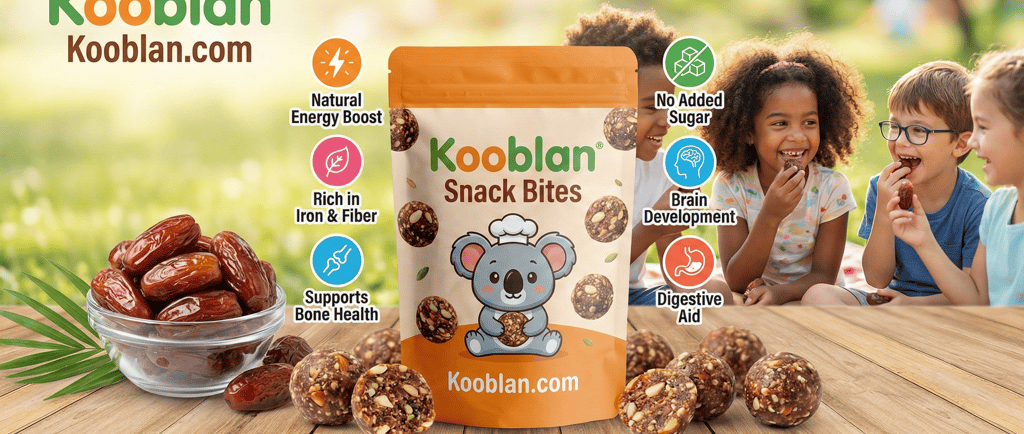
Parents everywhere are becoming more mindful about what goes into their children’s snacks. One ingredient is making a comeback as a natural, wholesome alternative to processed sugars, dates. At Kooblan, we use dates as one of the main ingredients in our kids’ snack bites and snack bars, and for good reason. Dates do more than just sweeten; they nourish.
Natural Sweetness vs. Processed Sugar
Processed white and brown sugars offer quick sweetness but little else. They spike blood sugar levels, give short bursts of energy, and then cause kids to crash soon after. Dates, on the other hand, provide slow-releasing natural sugars like fructose and glucose, paired with fiber that balances energy levels throughout the day. This means your child stays active, alert, and satisfied longer without the sugar rush or slump.
Packed with Essential Nutrients
One of the biggest differences between dates and refined sugars is nutrition. While sugar adds empty calories, dates are full of vitamins and minerals such as potassium, magnesium, calcium, and iron. They also contain antioxidants and natural fiber that support digestion, strengthen bones, and boost the immune system, important factors for growing children. Every bite of a Kooblan snack delivers energy plus essential nutrients their bodies need to thrive.
A Natural Boost for Brain and Body
Dates naturally contain nutrients that support brain development and focus. Their combination of fiber, natural sugars, and minerals helps regulate mood and promote steady concentration, making them an excellent snack companion for school days or study sessions. The fiber also supports healthy digestion, keeping kids feeling light and energized throughout the day.
Better Taste, Better Habits
Children love sweet flavors, and using dates helps parents encourage healthy eating habits early on. The caramel-like taste of dates satisfies that natural craving for sweetness, but without refined sugar or artificial ingredients. By choosing snacks sweetened with dates like Kooblan snack bars, you help your kids enjoy wholesome, feel-good treats without compromise.
Why Kooblan Chooses Dates
At Kooblan, we believe real food makes real difference. That’s why our kids’ snacks are sweetened naturally with dates, combined with oats, whole grains, and other nutrient-rich ingredients. Each bite supports balanced energy, healthy growth, and better snacking habits, all in one delicious package.
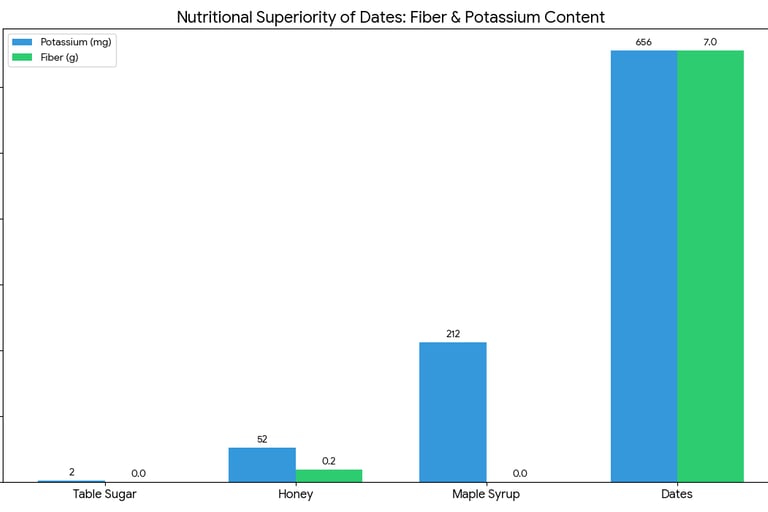
Most sweeteners are "empty calories," but Dates are a whole fruit. This chart compares the Potassium (mg) and Fiber (g) content per 100g.
While Table Sugar, Honey, and Maple Syrup provide virtually zero fiber, Dates are rich in digestive fiber (~7g). Dates also provide a massive boost of Potassium, essential for heart health and muscle function, whereas other sugars have negligible amounts.
Summary of Scientific Differences
Fiber: Unlike refined sugar or syrups, dates are a whole food. The fiber in dates slows down sugar absorption, which is the primary scientific reason for their lower Glycemic Index.
Antioxidants: Research indicates that dates often score higher in antioxidant content (specifically polyphenols) than honey and maple syrup.
Micronutrients: As shown in the second chart, dates act more like a vitamin supplement than a sweetener, providing significant Magnesium, Potassium, and Vitamin B6.
Healthy snacking shouldn’t mean sacrificing flavor. With dates, kids get all the sweetness they love and all the nutrition they need. Shop now!
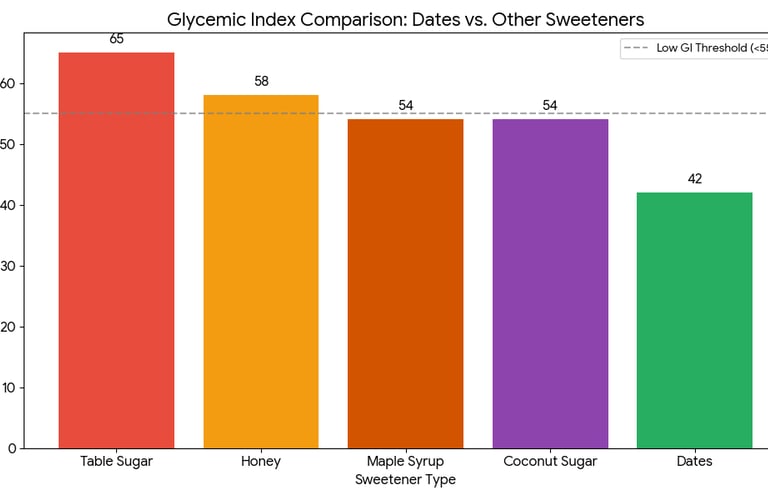
This chart measures how quickly each food raises blood sugar levels. A lower number is better for maintaining steady energy and avoiding "sugar crashes."
Dates have a significantly lower Glycemic Index (~42) compared to Table Sugar (65) and even Honey (58), making them a safer choice for blood sugar management.